
How to Choose a Crypto Exchange (Beginner’s Checklist for 2026)
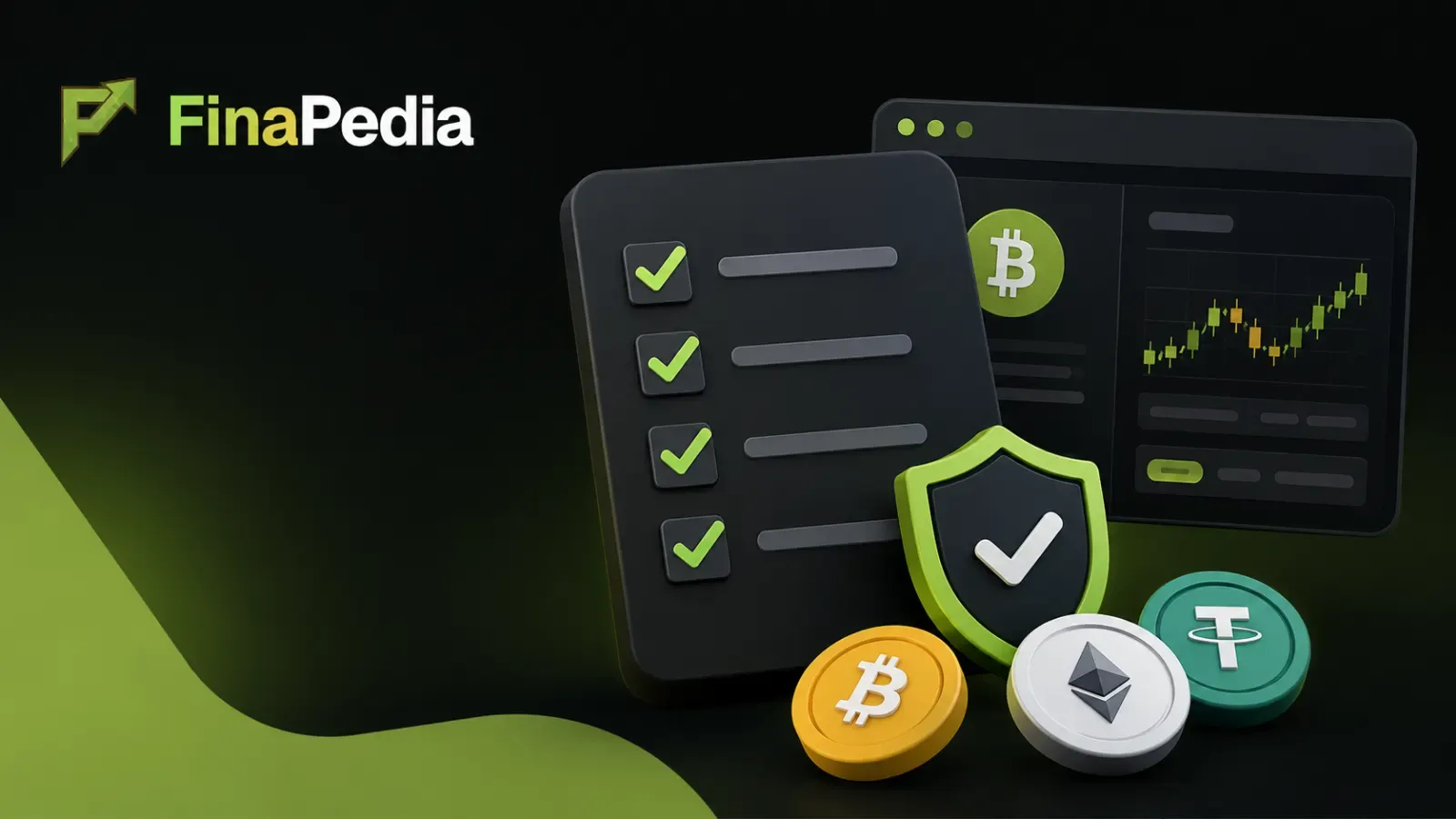
Choosing your first crypto exchange is one of the most important decisions you’ll make as a new investor or trader. The right platform can keep your funds safer, reduce fees, and make your learning curve much smoother, while the wrong one can expose you to unnecessary risk.
Because crypto involves real money and investment decisions, it falls under Google’s “Your Money or Your Life” (YMYL) category, which means you should be especially careful about where you trade and which information you trust. This beginner‑friendly checklist will help you evaluate any exchange step by step before you deposit a single dirham, dollar, or euro.
Centralized vs decentralized exchanges (start here)
Before you compare platforms, it helps to understand the two main types of exchanges:
Centralized exchanges (CEXs): Platforms like Binance, Coinbase, or Kraken hold your funds in custody accounts, match buyers and sellers off‑chain, and typically require full KYC (identity verification). They are usually regulated in at least one jurisdiction and provide fiat on‑ramps, mobile apps, and customer support.
Decentralized exchanges (DEXs): Protocols like Uniswap or PancakeSwap run on smart contracts and let you trade directly from your own wallet, so you retain custody of your crypto. Most DEX protocols themselves do not perform KYC, although some user interfaces restrict access based on local regulations.
As a beginner, most people start on a reputable centralized exchange because the UX, fiat deposits, and support are easier, then gradually learn how to use DEXs and self‑custody safely.
Beginner’s checklist at a glance
Here is the high‑level checklist you’ll use throughout this guide:
Regulation, licensing, and KYC
Security practices and custody model
Proof‑of‑reserves and transparency
Fees, spreads, and hidden costs
Supported coins, pairs, and products
Liquidity and trading volume
User experience, mobile app, and support
Reputation, reviews, and track record
Jurisdiction, restrictions, and tax tools
Education, risk warnings, and learning resources
In the next sections, we’ll unpack each point in plain language so you can compare exchanges confidently.
1. Regulation, licensing and KYC
Because crypto exchanges handle your money, regulators treat them more and more like other financial institutions, with rules on licensing, KYC (Know Your Customer), and anti‑money‑laundering controls. In Europe, for example, the MiCA framework and Travel Rule now require stronger identity checks and data sharing between providers for certain transfers.
What to look for:
Clear mention of the legal entity, regulatory licenses, and where the exchange is registered (e.g., EU, UK, US, Dubai).
A transparent KYC process: what documents are required, how long it takes, and what data is stored.
Clear risk and compliance disclosures instead of vague marketing promises.
Red flags:
No legal address, no company name, or completely anonymous team on the website.
“No KYC ever” claims paired with high leverage and aggressive marketing to beginners.
For YMYL topics like trading and investing, Google’s quality guidelines emphasize verifiable ownership, contact details, and compliance information as core trust signals—so the same things you want as a user also help platforms and publishers rank better.
2. Security fundamentals (how your money is protected)
Security is non‑negotiable. Well‑run exchanges combine strong technical defenses with clear public documentation of how they protect user funds.
Key security features to check:
Cold vs hot storage: Look for exchanges that keep the majority of user funds in offline cold wallets (for example, Coinbase publicly states that over 98% of user funds are stored in cold storage).
Independent audits and penetration testing: Serious platforms work with external security firms and sometimes publish summaries of their findings.
Two‑factor authentication (2FA): TOTP apps (Google Authenticator, Authy), hardware keys (YubiKey), and withdrawal whitelists significantly reduce account‑takeover risk.
Withdrawal controls: Features like address whitelists, withdrawal delays after password changes, and confirmation emails add additional layers of protection.
Security‑focused exchanges like Kraken and OKX highlight their security architecture, cold storage design, and recurring audits, which is exactly the kind of transparency you should look for. You should also avoid keeping large, long‑term holdings on any exchange and instead move them to a reputable hardware wallet when possible.
3. Proof‑of‑reserves and transparency
After several high‑profile failures and hidden insolvencies, proof‑of‑reserves (PoR) has become an important trust signal.
Some leading exchanges now publish cryptographic proofs (often Merkle‑tree or zero‑knowledge based) showing that the on‑chain assets they hold match or exceed user liabilities.
Platforms like Kraken and OKX have implemented recurring Merkle‑based or zk‑proof audits to verify reserves, going beyond simple PDF “attestations”.
When comparing exchanges, check:
Whether they publish PoR reports regularly.
If those reports are audited or verified by a reputable third party.
Whether they explain the methodology in non‑technical language so beginners can understand what is actually being proven.
Lack of any transparency around reserves is not an automatic scam signal, but in 2026 you have better options—so there is rarely a reason to choose a platform that hides everything.
4. Fees, spreads and hidden costs
Fees can erode your returns much faster than you think, especially if you trade frequently or in small sizes.
Spot and derivatives fees
Most major exchanges use a maker–taker model, where “taker” orders that remove liquidity pay a slightly higher fee than “maker” orders that add liquidity.
On top‑tier platforms, base spot fees often start around 0.08–0.10% for makers and 0.10% for takers, with discounts for high volume, VIP tiers, or using the platform’s native token.
Futures and perpetual contracts usually have even lower percentage fees, such as 0.02% maker / 0.05% taker for entry‑level users on some platforms like OKX.
Beginner‑oriented platforms like Coinbase sometimes charge steeper initial fees or spreads for simple buy/sell interfaces, while their “advanced” trading pages use a more standard tiered fee schedule.
Other costs to watch:
Spreads: The difference between bid and ask prices, especially on smaller pairs with low liquidity.
Deposit and withdrawal fees: Both fiat (bank transfer, card payments) and crypto withdrawals can include fixed or percentage fees.
Conversion and “instant buy” markups: One‑click purchase options often have built‑in spreads that are higher than using the spot order book.
Always check the full fee schedule page before committing to an exchange, and simulate a realistic scenario (e.g., 100–500 USD or EUR purchase) to see your true costs.
5. Supported coins, pairs and products
Your choice of exchange should match the assets and products you actually plan to use:
Blue‑chip assets: If you only want to buy Bitcoin, Ethereum, and a few large caps, almost any regulated major exchange will work.
Altcoins and long‑tail tokens: Some platforms offer 300–500+ tokens, while others list only the most established projects.
Derivatives and futures: Many advanced exchanges offer futures, perpetual swaps, and options with leverage; these are powerful but risky instruments and not ideal for complete beginners.
Finapedia’s reviews and comparisons can help you quickly see which platforms support spot trading only, which offer futures and margin, and which are strongest in specific niches like DeFi tokens or structured products.
6. Liquidity, volume and order execution
Liquidity determines how easily you can enter and exit positions without large price slippage.
High‑volume exchanges with deep order books allow you to trade larger sizes at closer to the “true” market price.
Very small or obscure platforms often have thin books, which means you might pay a much worse price than what you see on price aggregators.
You can quickly check 24‑hour volume and order‑book depth for major pairs like BTC/USDT or ETH/USDT on third‑party data aggregators before trusting a platform with serious capital.
7. User experience, mobile app and support
For beginners, user experience can make or break your first months in crypto.
Consider:
Interface design: Is there a clear separation between beginner and “pro” views? Are simple spot trades easy, without dumping you straight into complex derivatives screens?
Mobile apps: Look for well‑reviewed Android and iOS apps with regular updates and good ratings; many beginners trade mostly from their phone.
Customer support: Check if the exchange offers live chat, email support, or ticket systems, and whether average response times are reasonable.
Platforms that rank well in competitive “best exchange” lists tend to combine low fees and security with a clean UX and reliable support—Google’s own search results often mirror what users actually find easiest to use.
8. Reputation, reviews and track record
In the YMYL world of crypto, trust is not optional. Google’s own guidance for financial and Bitcoin publishers stresses that content and platforms must be accurate, fact‑checkable, and backed by real‑world expertise rather than hype.
When evaluating an exchange:
Search for the platform name plus phrases like “hack”, “withdrawal issues”, or “regulator warning”.
Read independent reviews (including Finapedia’s) and check how long the exchange has been operating.
Look for transparent communication in past crises—how did they handle outages, market crashes, or security incidents?
Exchanges that highlight their security measures, regulatory compliance, and user‑protection policies tend to dominate top search positions, which shows that both users and search engines reward visible trust indicators.
9. Jurisdiction, restrictions and tax tools
Your location matters.
Some exchanges are not available in certain countries or only offer a limited product set (for example, futures may be blocked in specific regions due to local regulation).
In regulated markets, exchanges must implement identity checks, transaction monitoring, and sometimes travel‑rule data sharing, which can impact withdrawal limits and privacy.
Many regulators and consumer‑protection bodies care about how platforms disclose risk, fees, and limitations, and misleading marketing can invite enforcement.
If you intend to trade actively or invest significant amounts, it is wise to choose an exchange that:
Clearly states which jurisdictions it serves.
Provides at least basic exportable statements or tax reports you can share with your accountant or local tax software.
10. Education, risk warnings and learning resources
Beginners need more than just a “Buy” button—they need context.
Google’s guidance for financial services SEO emphasizes data‑rich, educational content, expert guides, and transparent risk explanations as part of strong E‑E‑A‑T on YMYL pages. Exchanges that invest in high‑quality education usually also take user protection more seriously.
Look for:
A structured learn or academy section with explainers on wallets, private keys, order types, and risk management.
Clear leverage and liquidation warnings on margin and derivatives products.
Honest messaging about volatility and the possibility of losing your entire investment.
As a Finapedia reader, you can cross‑check exchange education with our independent explainers and tutorials to avoid relying on a single source.
How to use this checklist with Finapedia
Finapedia specializes in platform reviews, comparisons, and up‑to‑date market coverage across crypto, stocks, futures, and broader finance. That makes it the ideal companion to this checklist.
Here’s how to combine both:
Shortlist 2–3 exchanges that are actually available in your country.
Open Finapedia’s in‑depth reviews for each platform to see detailed breakdowns of fees, security, regulation, and product range.
Use our comparison articles to see side‑by‑side differences in maker/taker fees, supported markets, KYC levels, and user experience.
Re‑run this checklist against your final candidates to confirm that you’re comfortable with their security, reputation, and jurisdiction.
From an SEO perspective, this kind of internal linking—from broad tutorials like this guide to detailed platform reviews—also aligns with Google’s recommendations for building topical authority and E‑E‑A‑T in YMYL niches.
Quick step‑by‑step: choosing your first exchange
If you want a simple, practical flow, you can follow these steps:
Decide what you need: Just spot buying BTC and ETH, or also futures, staking, and altcoins?
Filter by legality: Check which exchanges are fully available and regulated in your country.
Compare security and PoR: Prefer platforms with strong cold‑storage policies, audits, and proof‑of‑reserves.
Compare fees on your typical trade size: Use fee tables and real examples (e.g., a 200 USD purchase) rather than marketing slogans.
Test with a small amount: Start with a small deposit, make a trade, and withdraw to a personal wallet or bank account to test the full flow.
This process is deliberately conservative; it helps you verify an exchange’s reliability before committing serious capital.
By following this checklist, using Finapedia’s in‑depth reviews, and starting small, you can choose a crypto exchange that fits your needs while minimizing unnecessary risk, both in the markets and in the platforms you trust.
Important disclaimer
This article is for educational purposes only and does not constitute financial, investment, tax, or legal advice. Crypto assets are highly volatile and carry significant risk, and both centralized and decentralized platforms can fail or be exploited. Always do your own research, consider your risk tolerance, and consult qualified professionals before making major financial decisions.
Frequently asked questions
Is it safe to keep my crypto on an exchange?
Exchanges can be convenient for trading, but they will always be a more attractive target for hackers than your own well‑secured hardware wallet. Many experts recommend keeping only the amount you actively trade on exchanges and moving long‑term holdings to self‑custody once you are comfortable managing wallets and seed phrases.
What is proof‑of‑reserves and why does it matter?
Proof‑of‑reserves (PoR) is a method for exchanges to demonstrate—often using cryptographic proofs—that they actually hold enough assets to cover all user balances. Platforms like Kraken and OKX use Merkle‑tree or zero‑knowledge based audits so users (and sometimes auditors) can verify that on‑chain holdings match liabilities without exposing private account details.
Do I need to complete KYC on every exchange?
Most centralized exchanges now require at least basic KYC to comply with regulations such as MiCA in the EU and various national AML laws. Some decentralized protocols let you swap assets without KYC, but many front‑ends block users from restricted regions, and on‑ramps that convert fiat to crypto typically always perform identity checks.
How much do fees matter for beginners?
If you trade only a few times per year, fees may not be your biggest concern compared with security and regulation, but they still add up. Active traders, especially those using small position sizes, can lose a significant chunk of their potential returns to maker/taker fees, spreads, and withdrawal costs, so comparing fee schedules early is a smart move.
Is this article financial advice?
No. This guide is for educational purposes only and does not constitute financial, investment, or legal advice. Always do your own research, consider your risk tolerance, and consult a qualified professional before making major financial decisions.
Related guides
What Is DeFi? A Plain-English Guide
DeFi uses blockchain apps to offer trading, lending, borrowing and other financial services. Learn how it works, what you can do and the risks.
What is staking and how does it work?
Crypto staking lets you earn rewards by helping secure proof‑of‑stake blockchains. Learn how staking works, different methods, and key risks beginners must understand.
What is spot trading vs futures (beginner’s guide)
New to crypto trading? Learn the difference between spot and futures, how they work, and which is safer for beginners before you touch leverage.